How Do I Get the Popup Window to Appear Again Speaker/headphone
Z7_3054ICK0KGTE30AQO5O3KA30N0
hp-concentra-wrapper-portlet
 Actions
HP Desktop PCs - No Audio from the Speakers or Headphones (Windows seven)
This certificate applies to HP and Compaq Desktop PCs with Windows seven.
The steps in this document describe how to troubleshoot and set up the problem when there is no audio coming from the speakers.
Stride 1: Using the Microsoft Sound Troubleshooter in Windows 7
To automatically fix many types of sound problems, use the Microsoft Sound Troubleshooter.

-
Click Starting time
 , and and then click Command Panel.
 -
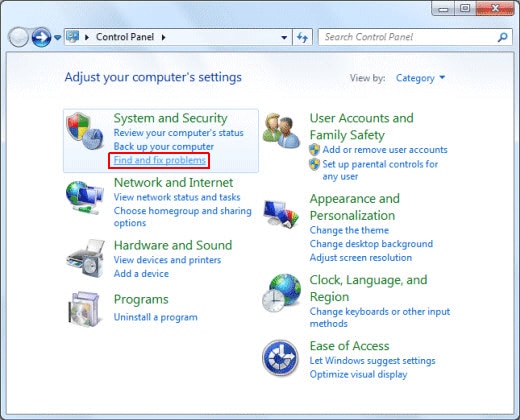
Under System and Security, click Find and set issues.
-
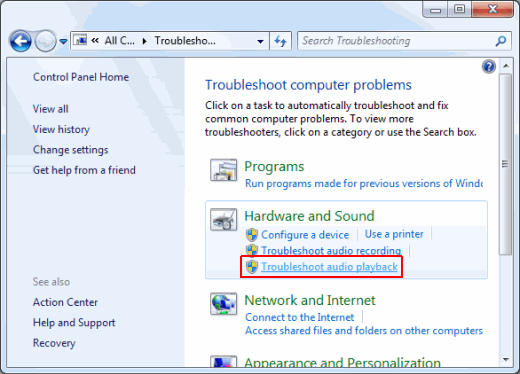
The Troubleshoot figurer problems page opens. Under Hardware and Sound, click Troubleshoot audio playback.
-
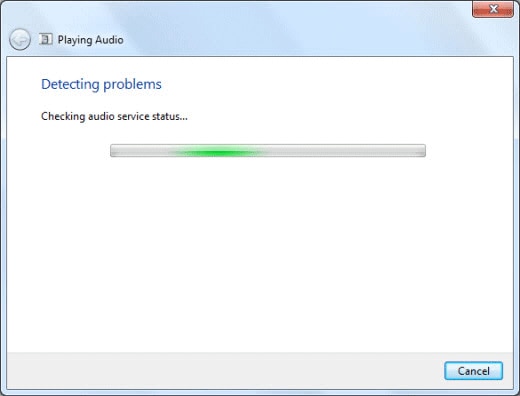
The Playing audio troubleshooting page displays. Click Next to proceed.

-
Wait while the troubleshooter checks the computer for issues.
-
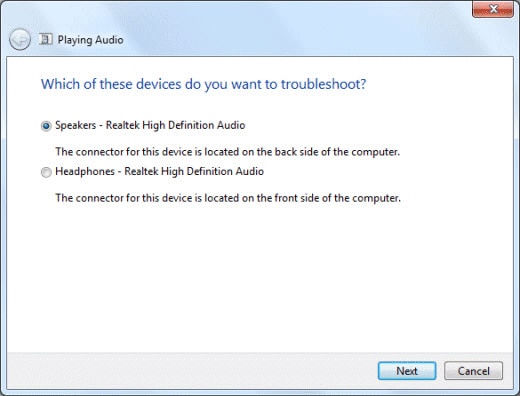
Select the audio connexion device y'all want to troubleshoot, such equally speakers. Then click Next.
-
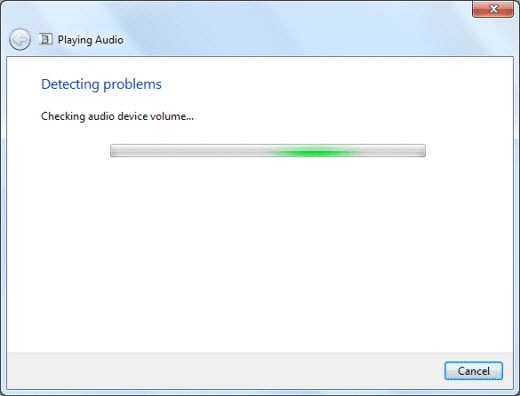
Look while the troubleshooter detects issues and makes changes.
-
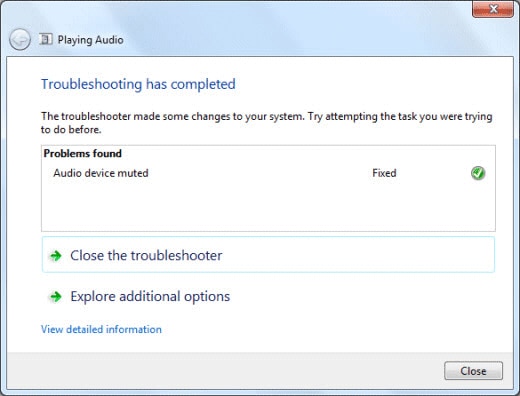
When the troubleshooter is washed, the Troubleshooting has completed page displays listing any problems found and what changes were made to the computer.
note:
For detailed data almost the troubleshooting, click View detailed data.
Click Shut.
Footstep 2: Checking volume and mute settings
The volume setting for one or more than sound devices might be disabled or ready too low. There are several things that tin change sound volume: the volume control knob for your speakers or monitor, Windows volume controls, and volume controls in sound software. If any of these volume controls are muted or fix too low, the entire sound experience is affected. Use the post-obit steps to adjust volumes to right levels:
-
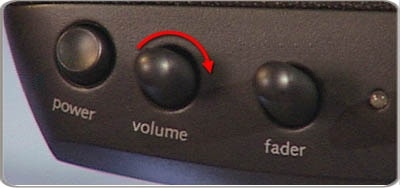
If your powered speakers accept a volume command knob, fix it to halfway.
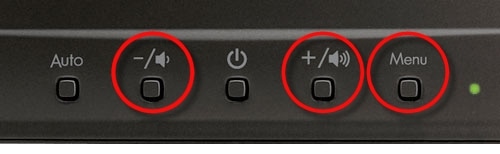
If you are using speakers that are built into your monitor, make sure sound is enabled for the monitor and volume is set to halfway. Adjust the sound settings for your monitor by using the buttons on the monitor and/or the on-screen menu. To discover more specific information most using and adjusting your monitor speaker settings, come across the support documentation that came with your monitor.
-
Click Start
, and then click Control Panel. -
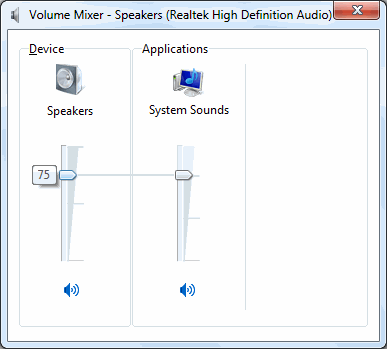
Click Hardware and Sound. Under Audio, click Suit system volume. The Volume Mixer window opens.
-
Make certain the book is not muted by looking at the foursquare Mute buttons below the volume slider. If the button displays a small red circle, the book is muted.
If the volume is muted, click the Mute push to enable audio. The red circle on the speaker icon disappears when audio is no longer muted.
Sound muted
Audio not muted


-
After verifying that the sound is non muted, elevate the volume adjuster up until it is at 75%.
-
To exam, click the volume slider bar. If you hear a ding audio from all speakers, you are finished troubleshooting.
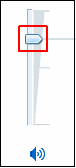
If you however do not hear whatsoever sound, set your default speakers and examination them.
Step 3: Setting default speakers and testing them in Windows seven
-
If headphones are continued and yous are non using them every bit your main speakers, disconnect the headphones now. Connecting headphones to the computer mutes other speakers.
-
Click Start
, and type Audio into the Search box. -
In the search results, click Sound under the Programs list.
-
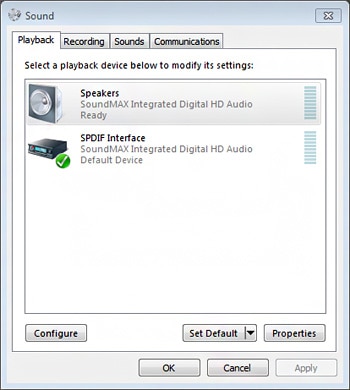
Find your connexion type. If y'all accept more than one connectedness blazon, such as HDMI and Speakers, and then choose the connection type you lot want to use.
Speakers

If you are using typical computer speakers or headphones (analog sound devices), brand certain Speakers is selected. This is the virtually common sound setup for a desktop computer environment and includes many types of headphones, desktop speakers, 5.ane and 7.i sound systems. Many monitors with born speakers also support a speaker connexion using a separate audio cable continued from the reckoner to the monitor (non an HDMI connection).
Digital Output
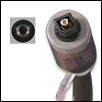
If you lot want to send all sound from the computer to digital speakers or a stereo digital device, brand sure the playback device labeled with Digital Output is selected.
HDMI

If your computer has an HDMI connectedness and you are trying to use the speakers in a TV or monitor, brand sure the playback device labeled with HDMI is selected.
-
In the Sound window, select your Playback Device and click the Set Default push button.
-
With the default Playback Device selected, click the Configure push button.
-
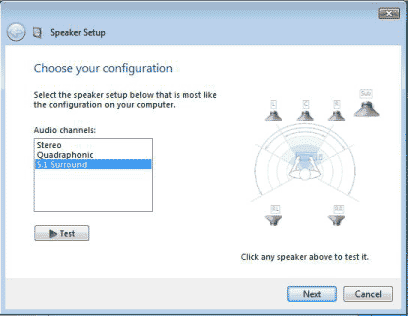
Click your type of speaker setup in Sound channels.
-
Click the Test button to transport sound to each speaker, or click an individual speaker to send sound to it.
-
If sound is heard correctly from each speaker, you are finished.
If audio is missing from all or i of the speakers, or if the configuration type was inverse, continue with speaker setup by clicking Adjacent. Follow the on-screen instructions to complete the speaker setup.
Play a audio. If audio problems go along, bank check the speaker connections.
Step 4: Checking speaker connections
Use these steps to make certain you have the speaker cables connected to the correct audio connectors.
-
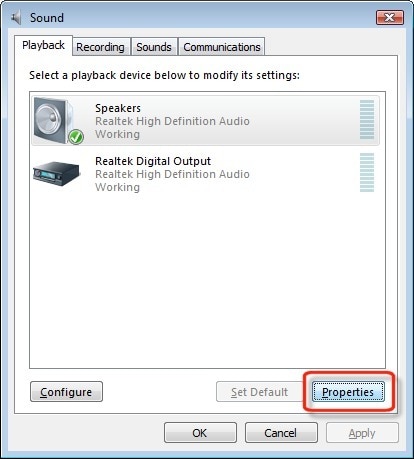
From the Windows Audio window, select Speakers, and and so click Backdrop.
-
The Speakers Properties window contains a list of colour-coded connectors that corresponds to each pair of speakers. Use this information to decide which connector goes with the speaker pairs that yous are using.

This case shown in the image is for a 7.1 Surround setup, where:
-
L R (light-green, Line Out) is for the front left and right speaker pair (the greenish connector, usually labeled Line out).
-
RL RR (orange) is for the Rear-left and Rear-right speaker pair.
-
C Sub (blackness) is for the Center or Subwoofer speaker.
-
SL SR (gray), is for Side Left and Side Correct speakers
-
-
Make certain each speaker cablevision is continued to its respective connector on the back of the computer. The colors shown in the Speakers Backdrop window friction match the connector color on the figurer.
-
If you accept 5.1 or greater speakers, connect the speaker cables to the speaker hardware (usually on the subwoofer). And then match the speaker cablevision to the connectors on the computer using the colors shown in the Speakers Belongings window.
-
Play a sound. If sound problems go along, check for audio from plugged-in headphones.
Footstep 5: Checking for sound from headphones
If at that place is still no sound, check for sound output using headphones.
Headphones and connectors
Two types of headphone connectors are bachelor on HP computers. One supports just sound to the headphones, and the other supports audio to the headphones and the use of a microphone. The connectors are marked with symbols next them.
-
Connectors on the computer marked with a headset only,
 , support output sound merely and work with a standard three-pin headphone or a four-pin headphone, for audio.
-
Connectors on the computer marked with a headset with a microphone,
 , support sound and the use of a microphone when used with a headset with a 4-pin plug and a microphone.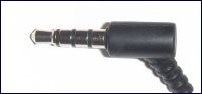
To hear sound, either plug may be used with either connector. Using a iv-pivot plug that is capable of supporting a microphone in a three-pivot connector allows sound to be heard, but the microphone does not work because the estimator's 3-pin connector does not support a microphone.
-
Find and unplug all audio cables from the back of the computer.
-
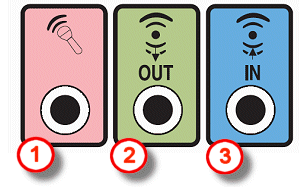
Plug headphones direct into the speaker out connector on the back of the estimator. The speaker out connector might have a symbol of a speaker or a circumvolve with an arrow pointing out, or it might be labeled as OUT.
-
Test for sound in Windows. Double-click the volume icon in the taskbar, and then click the volume control slide in the Volume Mixer.
Each time yous click the master book slide bar, y'all should hear a beep audio through the headphones.
-
If y'all hear audio through the headphones, the sound hardware on the computer is working, and the issue is probably related to the speakers or speaker cables. Disconnect the headphones and reconnect the speakers.
When washed, examination again for sound using the same steps as to a higher place with the volume control slider. If sound notwithstanding does non work correctly later on reconnecting the speakers, try replacing the speaker cable (if possible), or speaker fuse and test over again.
-
If you cannot hear sound through the headphones, brand sure that you are connecting the headphones into the right connector, and try again. If there is still no sound, continue to the next footstep when you are sure the headphones are connected to the correct audio connector on the back of the computer.
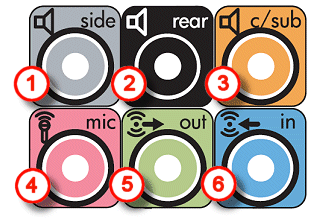
-
Microphone connector or Heart/Subwoofer Out
-
Front speaker connector (to front powered speakers or headphones)
-
Line-in or Rear speaker Out
-
Side speaker out
-
Rear speaker out
-
Heart and subwoofer out
-
Microphone
-
Line-out (to front powered speakers or headphones)
-
Line-in
-
Pace half-dozen: Restoring the audio driver in Windows 7
Audio files and settings that become changed can cause sound issues. Restore the audio driver to reset sound settings for the sound hardware and reinitialize the audio configuration in Windows.
annotation:If the computer was upgraded to Windows Vista before being upgraded to Windows 7, you might not be able to utilize all the features of an integrated audio device that is compliant with Audio Codex '97 (AC '97) specifications. To resolve this, update the audio driver. Run across Update the audio driver.
Use the commuter recovery process to restore sound drivers for the original sound hardware using the following steps:
-
Click Start
, All Programs, Recovery Manager, and so click Recovery Manager again.
-
Click Hardware Commuter Reinstallation.
-
On the Hardware Driver Reinstallation welcome screen, click Next.
-
Select the sound commuter to reinstall, and then click Next.
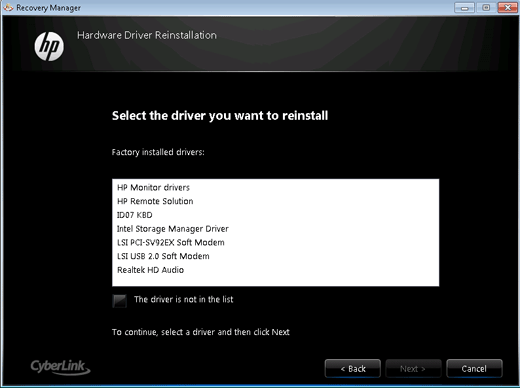
note:
If the driver you want to reinstall is not listed, select The driver is not in the listing, and then click Next. Helpful data will propose you how to install drivers using the Windows Device Manager. Follow the onscreen instructions.
-
The Recovery Manager begins reinstalling the chosen driver. Later the driver installation is complete, click Finish to restart the figurer.
-
Afterward restarting the calculator, examination for sound. If there is still no sound, continue to Update the audio driver.
If you are unable to reinstall the driver using Recovery Managing director, scroll back to the previously installed driver through Control Panel:
-
Click Start
, and enter Device Manager into the Search field. Click Device Manager.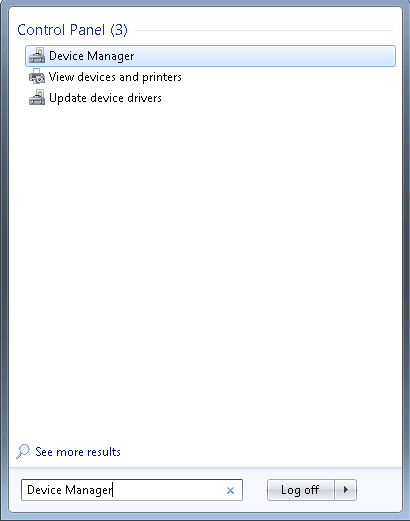
-
Double-click Sound, video and game controllers.
-
Right-click the name of the audio device and select Properties.

-
Click the Commuter tab.
-
Click Curlicue Back Commuter.

-
Click Yes to roll back to the previous driver.
-
Test for sound.
If there is even so no sound, update the audio driver.
Step 7: Updating the audio driver
An updated audio driver might resolve the problem if the computer is experiencing sound issues after upgrading the operating organisation to Windows vii, or the calculator is experiencing sound problems in a particular software program.
Click the following heading or the accompanying plus (+) sign to expand the information.
Updating the audio driver using Device Manager in Windows 7
Update the audio driver using Device Manager as follows:
-
Connect to the Cyberspace.
-
Click Start
, and blazon device manager into the Offset Search field. Then click Device Manager in the Programs list.Device Manager opens.
-
Double-click Sound, video and game controllers.

-
Right-click the name of the sound device listed under Audio, video and game controllers.
-
Select Update Driver Software.
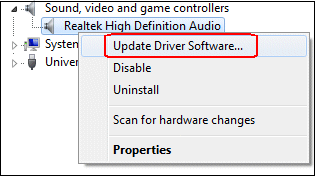
-
Click Search automatically for updated driver software.

-
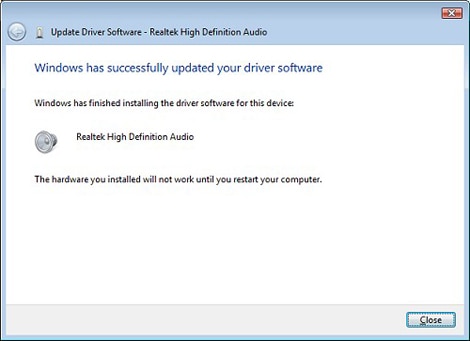
Windows checks for and installs any updated drivers institute. The Window displays whether the computer already has the latest available driver or if Windows was able to successfully update the audio driver.
-
If a window opens that asks you to restart the estimator, restart the figurer.
-
Exam for audio. If sound bug persist or no drivers could be found and installed, continue updating the audio commuter through HP Support Assistant.
Updating the audio driver with HP Support Assistant
Utilize the steps in this section to update the audio driver with HP Support Banana.
annotation:Earlier using the HP Support Assistant, be sure you are using the latest version. If you do not have the latest version, or you are experiencing problems with HP Back up Assistant, run across Download HP Back up Assistant.
-
To open HP Support Assistant, click the HP Back up Banana (
 ) icon in the taskbar.
 -
From the My devices screen, click Updates.

-
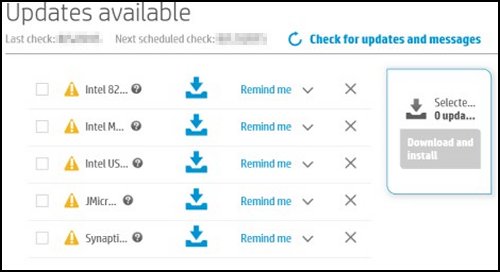
Click Check for updates and messages.

-
Search for an audio driver update from the list. Next to the audio driver update, if available, click the Install at present icon
 .
.
-
Test for audio later on updating the audio driver.
-
If an audio update is non bachelor or the audio problem persists after the update, continue to downloading the driver directly from the sound technology provider.
Stride 8: Checking Device Manager in Windows 7
If you cannot hear sound, check Device Manager to determine the country of the audio hardware.
-
Click First
, and type device manager into the Start Search field.The Device Manager window opens.
-
Double-click Audio, video and game controllers.
-
Practise the following, depending on what displays:
-
If a sound device is not listed and the computer uses a sound card, reseat the sound bill of fare into the motherboard slot. Go to the side by side step if problems go along.
- If a sound device is not listed and the computer uses on-board sound, the sound hardware might need to be enabled in the BIOS. Become to the side by side step to check the sound setting in the BIOS and friction match the setting to the hardware configuration of your computer.
-
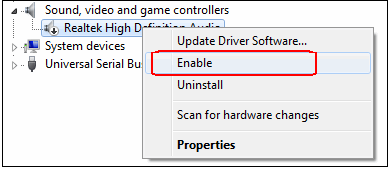
If a audio device is listed with a downwardly arrow, the device is disabled. Right-click the sound device name and select Enable to re-enable the device. Become to the next step if bug go along after enabling the device.
-
If a audio device is listed, right-click the device name and select Properties to view more than helpful troubleshooting information in the Device Status window. If Device Status shows that the device is working correctly, the trouble is probably related to sound settings, the speakers, or the cables.
-
Step 9: Configuring on-board sound in the BIOS
Some computers come up with sound on the motherboard (on-lath sound), some come with a sound card, and some come with both on-board sound (disabled) and a sound carte.
The on-lath sound setting in the BIOS must be set to match your particular audio hardware configuration. Perform one of the following sets of steps depending on whether you want to reset the BIOS to its manufactory defaults or only accommodate the on-board audio setting:
Click the following heading or the accompanying plus (+) sign to expand the information.
Irresolute the On-board audio setting in the BIOS
Utilise this step to make sure the On-lath Audio setting in the BIOS matches the setting required past your sound hardware configuration.
-
Examine the back of the calculator and use one of the post-obit three configuration examples to help you determine your audio configuration and the required BIOS audio setting. Read all three items earlier making your choice.
-
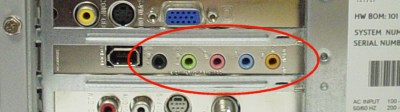
Configuration A (On-lath Audio): If the sound connectors for the speakers and microphones are located next to the parallel, serial, or USB ports, the computer has On-board Audio. The On-board Audio setting in the BIOS should exist Enabled.

-
Configuration B (Soundcard): If the sound connectors for the speakers and microphone are located abroad from the parallel, serial, or USB ports, the figurer has a soundcard. If the BIOS has an On-board Audio setting bachelor, the On-lath Audio setting in the BIOS should be Disabled. If the BIOS does not have an On-board Audio setting, you do non need to alter a BIOS setting, skip to Step viii: Removing sound drivers in Safe Mode.
-
Configuration C: If the reckoner has audio connectors in both locations, the on-board sound setting in the BIOS should be Disabled.
-
-
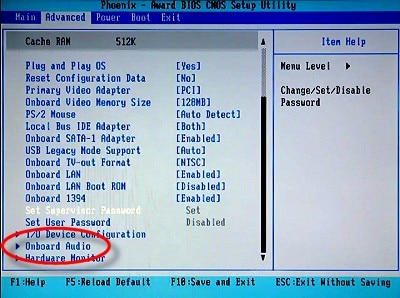
To enter the BIOS, turn on the figurer and begin pressing the F10 fundamental repeatedly until a BIOS Setup screen opens.
-
Employ the Left and Right Arrow keys to select the Avant-garde tab.
-
Find and select the avant-garde carte items that correspond to audio. This might exist one of the following:
-
Onboard Audio
-
Onboard Audio Options
-
I/O Device Configuration
-
On-board Sound
-
Audio
-
Sound Codec
-
-
Select either Enabled or Disabled depending on the figurer configuration, and press Enter.

-
Press F10 and so printing Enter to save and go out.
Windows opens.
-
Cheque for sound.
-
If you can hear audio, you are finished.
-
If there is still no sound, close down the computer and continue using these instructions.
-
-
Afterward the figurer shuts, unplug the computer power cable and press the power push button for 20 seconds. This removes all of the power from the figurer.
-
Plug the ability cable in and plow on the estimator.
-
To enter the BIOS, turn on the figurer and when the start logo screen displays, press the F10 key repeatedly until a BIOS Setup screen opens.
-
Printing F5, select Yes, and and so printing F10 to save the default BIOS settings.
-
Wait for Windows to open up and so play a sound. If sound problems persist, inspect the speaker hardware.
henryyousuponchis.blogspot.com
Source: https://support.hp.com/us-en/document/c01884922

Postar um comentário for "How Do I Get the Popup Window to Appear Again Speaker/headphone"