Catholic Family Services $15 Million Housing Project South Wenatchee
Why Canada is mourning the deaths of hundreds of children
By Holly Honderich
BBC News, Washington
Prototype source, Getty Images
The discovery has prompted an outpouring of grief
The discovery in May of the evidence of remains of 215 Indigenous children - students of Canada's largest residential schoolhouse - prompted national outrage and calls for farther searches of unmarked graves.
Since and then, more than unmarked gravesites have been establish, providing previews of investigations by Canada'south Kickoff Nations into the deaths of residential school students.
A ascent tally of these graves - more 1,100 so far - has triggered a national reckoning over Canada'due south legacy of residential schools. These government-funded boarding schools were part of policy to attempt to digest Indigenous children and destroy Indigenous cultures and languages.
Here's what we know nearly the findings so far.
What do we know about the 215 graves?
In May, Tk'emlúps te Secwépemc Master Rosanne Casimir announced that the remains of 215 children had been found most the city of Kamloops in southern British Columbia (BC) as part of a preliminary investigation.
Some of remains are believed to be of children as young every bit three.
All of the children are believed to accept been students at the Kamloops Indian Residential Schoolhouse - the largest such institution in Canada's residential school arrangement.
The remains had been confirmed with the help of ground-penetrating radar engineering science, Chief Casimir said, following preliminary work on identifying the burial sites in the early 2000s.
The full report into the remains institute is due on Thursday, and the earlier findings may be revised. Ethnic leaders and advocates have said they expect the 215 figure to rise.
"Regrettably, we know that many more than children are unaccounted for," said Main Casimir in a statement.
Thousands of children died in residential schools and their bodies rarely returned home. Many were cached in neglected graves.
To this day there is no total picture of the number of children who died in residential schools, the circumstances of their deaths, or where they are buried. Efforts like those of the Tk'emlúps te Secwépemc First Nation and others are helping to piece some of that history together.
The Kamloops school, which operated between 1890 and 1969, held upwardly to 500 Indigenous students at any one fourth dimension, many sent to live at the school hundreds of kilometres from their families. Between 1969 and 1978, it was used equally a residence for students attending local day schools.
Of the remains constitute, 50 children are believed to take already been identified, said Stephanie Scott, executive director of the National Center for Truth and Reconciliation. Their deaths, where known, range from 1900 to 1971.
But for the other 165, there are no bachelor records to mark their identities. Children "concluded upward in pauper graves," Ms Scott said. "Unmarked, unknown."
What about the other sites?
In June, the Cowessess First Nation in Saskatchewan announced information technology had institute an estimated 751 unmarked graves after a similar investigation - the largest such discovery to date. The remains were found near the former Marieval Indian Residential School, which operated from 1899 to the 1990s and nether the control of the Roman Cosmic Church building for much of that time.
Cowessess leaders take not notwithstanding determined if all the unmarked graves belonged to former students. Technical teams will continue the investigation to provide verified numbers.
Cowessess Chief Cadmus Delorme emphasised that the discovery was of unmarked graves - not a mass grave site - and suggested that the Catholic Church may have removed grave markers at some bespeak in the 1960s.
A week subsequently, the Lower Kootenay Band in British Columbia said the remains of an additional 182 people had been institute virtually the grounds of the former St Eugene'southward Mission School. St Eugene's was operated by the Catholic Church from 1912 until the early 1970s.
"No reconciliation without truth": A survivor recounts corruption in Canadian residential schoolhouse
And in mid-July, the Penelakut Tribe in British Columbia said it had identified some 160 "undocumented and unmarked graves" on their grounds and foreshore near the former site of the Kuper Island Industrial School. They offered few details, though the tribe has been working with researchers in recent years to observe potential gravesites.
What are residential schools?
The Kamloops residential school was one of more than 130 others similar information technology. The schools were operated in Canada between 1874 and 1996.
A linchpin in the authorities's policy of forced assimilation, some 150,000 First Nations, Métis and Inuit children were taken from their families during this period and placed in state-run boarding schools.
The policy traumatised generations of Indigenous children, who were forced to abandon their native languages, speak English or French and convert to Christianity.
Christian churches were essential in the founding and operation of the schools. The Roman Cosmic Church in detail was responsible for operating up to lxx% of residential schools, co-ordinate to the Indian Residential School Survivors Gild.
"It was our regime's policy to 'become rid of the Indian' in the child," said erstwhile National Chief of the Assembly of Kickoff Nations Perry Bellegarde. "It was a breakdown of cocky, the breakdown of family, community and nation."
Timeline: The key dates
Canada's first prime government minister, Sir John A Macdonald, authorises the creation of a residential school system, established by Christian churches and the federal government, with the intent to assimilate ethnic peoples in Canada.
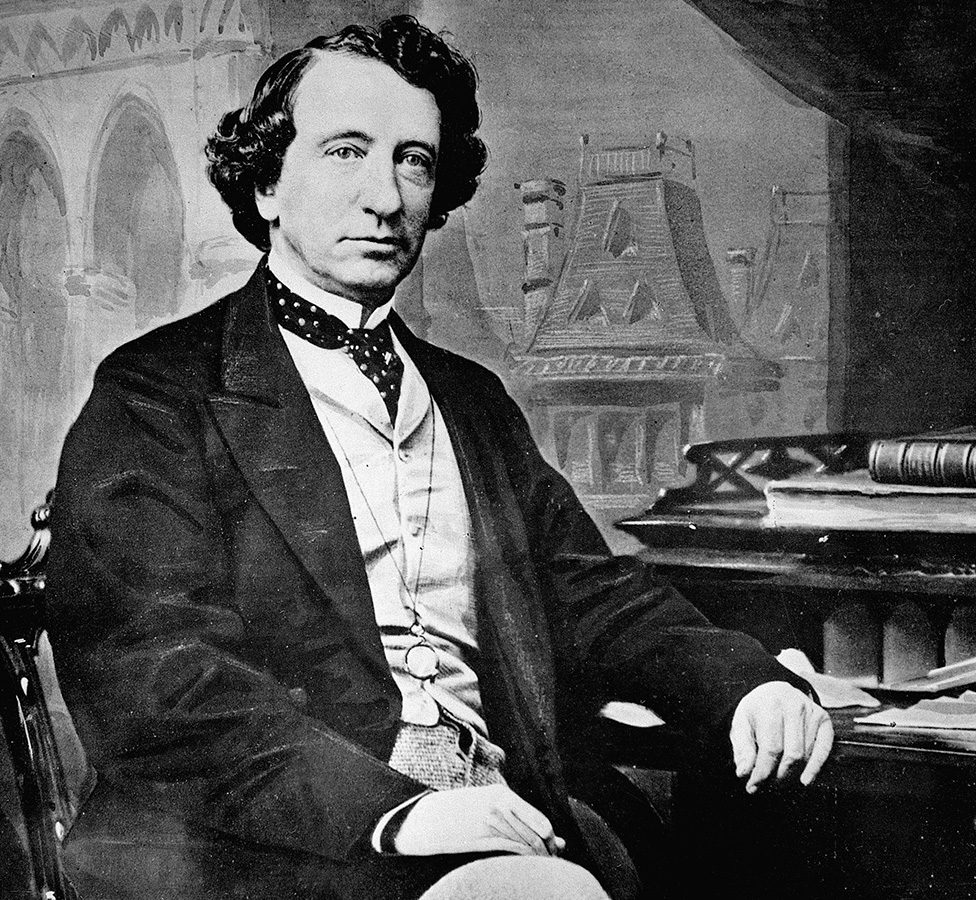
Residential schools are made compulsory for children from historic period seven to fifteen. Some 150,000 Starting time Nations, Metis and Inuit children are eventually taken from their homes, with many parents surrendering them nether threat of prosecution.
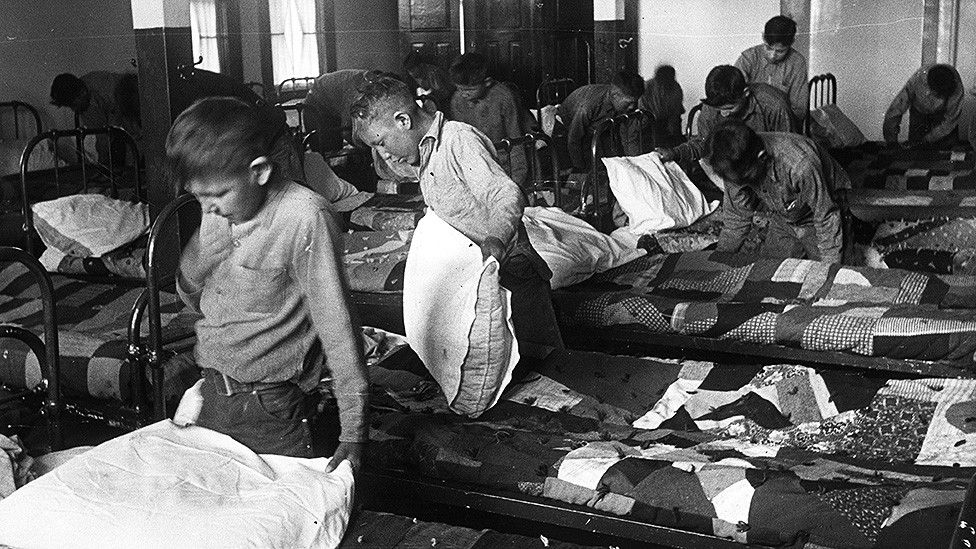
The residential schoolhouse system begins to wind down - though the last school volition close in 1996 - as the psychological and cultural impacts of the schools come under growing scrutiny.
An estimated six,000 children die at the schools, co-ordinate to the quondam chair of Canada'due south Truth and Reconciliation Commission Murray Sinclair. They die from causes like affliction, neglect, or accidents. Physical and sexual abuse is likewise common.
There is yet no full film of the number of children who died or where many of them are buried.
Canadian Prime Government minister Stephen Harper issues a formal amends for the residential school system, which saw over 130 such institutions operating across Canada.
"Today, we recognise that this policy of assimilation was incorrect, has caused great harm, and has no place in our state," he says.
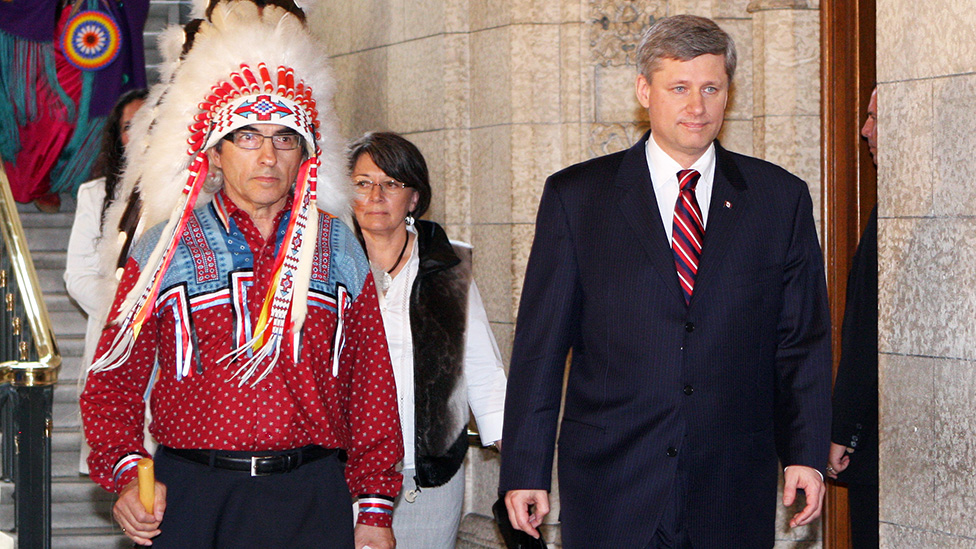
The Truth and Reconciliation Committee of Canada releases its terminal report on the legacy of residential schools and describes the central policy behind the system as one of "cultural genocide". It recommends funding to detect burial sites and commemorate the children who died away from home.
Tk'emlúps te Secwe̓pemc First Nation in British Columbia announces that a preliminary investigation, using footing penetrating radar, has establish an estimated 215 unmarked graves at the site of a former residential school. Other Get-go Nations in Canada are conducting similar research.
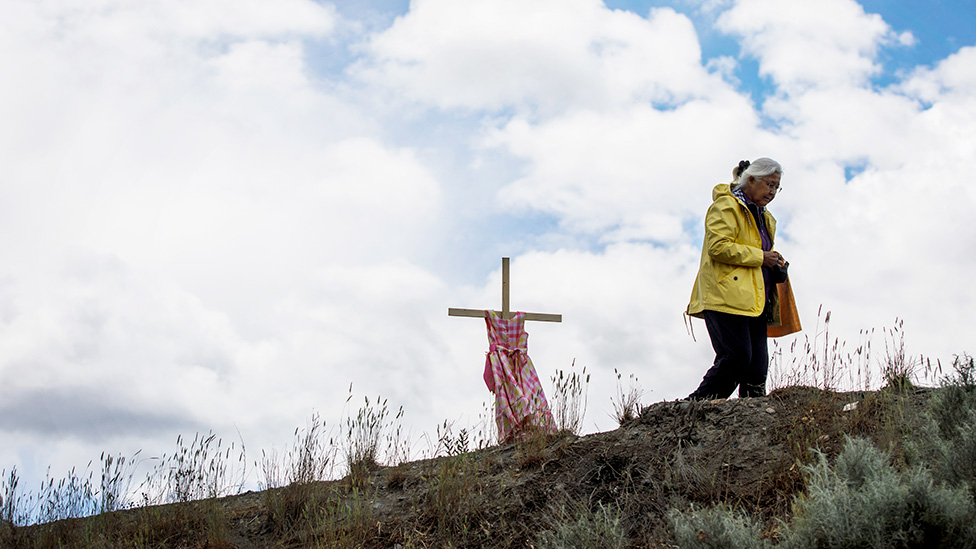
The landmark Truth and Reconciliation Committee (TRC) report, released in 2015, detailed sweeping failures in the care and safety of these children, and complicity by the church building and government.
"Authorities, church and school officials were well aware of these failures and their touch on on pupil health," the authors wrote. "If the question is, 'who knew what when?' the clear answer is: 'Everyone in authorisation at any bespeak in the system's history.'"
Students were often housed in poorly built, poorly heated, and unsanitary facilities, the report said. Many lacked access to trained medical staff and were subject to harsh and often abusive punishment.
The squalid wellness atmospheric condition, the report said, were largely a function of the regime's resolve to cut costs.
"Nosotros have records in our archives of school administrations arguing with the Indian affairs authorities at the fourth dimension nigh who was going to pay for the funerals of students," Ms Scott said. "They would do it all at minimal expense."
What practise nosotros know about the search for missing children beyond Canada?
Research by the TRC found that thousands of Ethnic children sent to residential schools never fabricated information technology domicile.
Concrete and sexual abuse led some to run abroad. Others died of disease or by accident amid neglect. As late equally 1945, the death rate for children at residential schools was virtually v times higher than that of other Canadian schoolchildren. In the 1960s, the rate was nonetheless double that of the general educatee population.
Image source, Getty Images
Children'southward shoes have been left at makeshift memorials across Canada
"Survivors talked about children who all of a sudden went missing. Some talked near children who went missing into mass burying sites," said former TRC chair Murray Sinclair in a statement in May.
Other survivors spoke of infants fathered by priests at the school, taken from their mothers at birth and thrown into furnaces, he said.
The TRC identified iii,200 confirmed deaths, though it noted that the work of identification and commemoration was "far from complete". Mr Murray estimated some vi,000 children may have died.
What has been done?
In 2015, the TRC issued 94 calls to activity, including six recommendations regarding missing children and burying grounds. Prime Minister Trudeau promised to "fully implement" all of them.
- According to a running count by the CBC, 10 of the projects have been completed, 64 are in progress and 20 have not begun
- The TRC, struck in 2009, fought for the issue of unmarked burial sites to be included in its mandate
- In 2019, the government committed C$33.8m ($28m; £xix.8m) over 3 years to develop and maintain a school student death register and set upwardly an online registry of residential school cemeteries
- And then far, the National Centre for Truth and Reconciliation says it has received just a fraction of this money though "discussions are ongoing"
What has been the reaction?
In early July, Mr Trudeau visited Cowessess Offset Nation and said it was "shameful" that children died because of residential schools and the "legacy of inter-generational trauma" caused by the policy.
Ms Scott, along with Primary Bellegarde and other Indigenous leaders, have pressed the government for a thorough investigation of all 130 onetime school sites to find any unmarked graves.
"Trudeau has been willing to move on this, he's got a lot of words, but we really need to see action," said Ms Scott.
Prototype source, Getty Images
Kickoff Nations community members get together for a vigil in Marieval after a discovery of unmarked graves
The discoveries also cast a shadow over the country's 1 July Canada 24-hour interval vacation. Municipalities across Canada chosen off celebrations this twelvemonth in recognition of the findings.
The preliminary findings have besides renewed demands for an apology from the Catholic Church - one of the calls to activity in the TRC study.
In 2017, Mr Trudeau asked Pope Francis to apologise for the church's role in running Canada'southward residential schools - but the church building has then far declined.
The United, Anglican and Presbyterian churches issued formal apologies in the 1980s and 1990s.
News of the BC discovery also spurred a global response, prompting statements from Man Rights Watch and the United nations.
More than on this story
henryyousuponchis.blogspot.com
Source: https://www.bbc.com/news/world-us-canada-57325653

Postar um comentário for "Catholic Family Services $15 Million Housing Project South Wenatchee"